Top 5 Meatball Production Lines for Commercial Use in 2026
The commercial meatball production line market has grown quickly in 2026. Buyers now range from small butcher shops to large food factories, and each needs a different level of automation, capacity, and floor space. Choosing the right system means matching your production target to the correct machine configuration.
This article reviews five practical meatball production line setups for commercial use. The reviews are based on the Taizy line specifications, which include a standard output of 500 to 600 pieces per hour, a raw meat processing rate of 100 to 200 kilograms per hour, 304 stainless steel construction, and a complete workflow from meat preparation to vacuum packaging.
What Counts as a Commercial Meatball Production Line?
A commercial-grade meatball production line is built for daily operation, not occasional batch work. It connects multiple machines into a continuous workflow and uses food-safe materials. Key features include:
- 304 stainless steel food-contact parts
- 380V three-phase industrial power
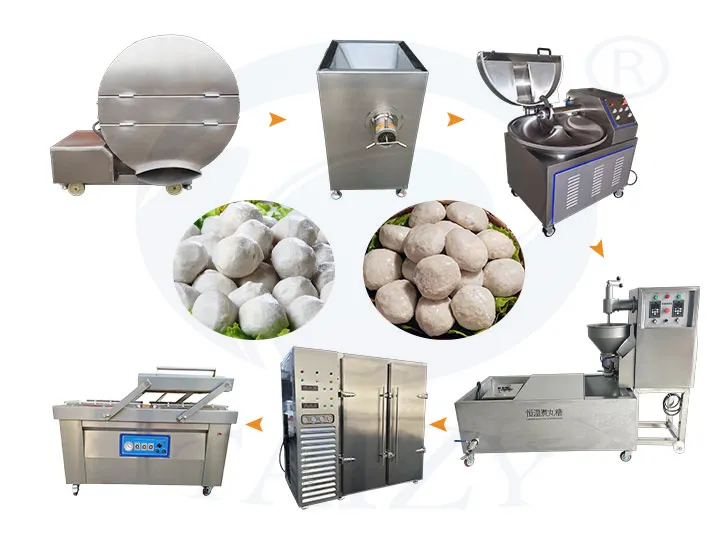
- Multiple connected stages: grinding, mixing, forming, cooking or shaping, freezing, and packaging
- Output suitable for supermarkets, restaurants, schools, or export
The Taizy meatball production line meets these standards and serves as the reference for the five configurations below.
Top 5 Meatball Production Lines for Commercial Use
1. Entry-Level Semi-Automatic Meatball Making Machine
This option suits businesses just entering the meatball market. It usually includes a meat grinder, a mixer, and a meatball forming machine connected by short conveyors. Output sits around 200 to 300 pieces per hour.
It is compact, often under six meters in length, and requires two to three operators. The lower price makes it attractive for startups and small butcher shops testing demand before scaling up.
Best for: startups, small meat shops, and recipe development.
2. Standard Automatic Meatball Production Line
This is the most balanced option for commercial buyers. Based on the Taizy design, it produces 500 to 600 pieces per hour from 100 to 200 kilograms of raw meat per hour. The line length is about 8 to 12 meters, and the total weight is 800 to 1,200 kilograms.
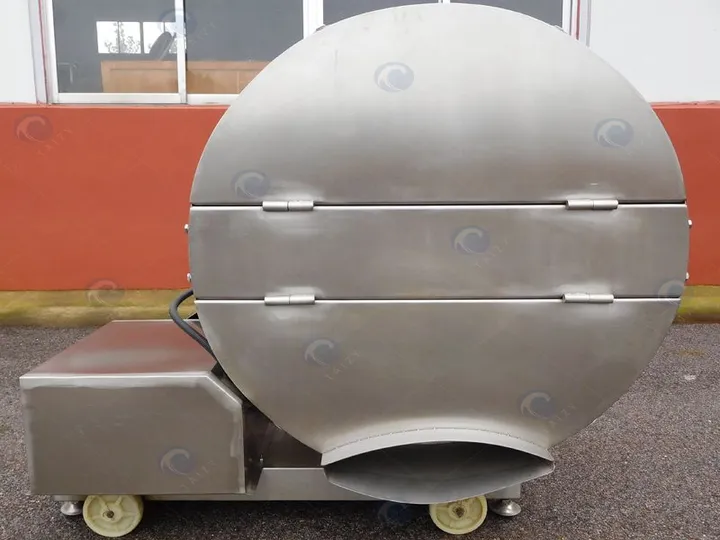
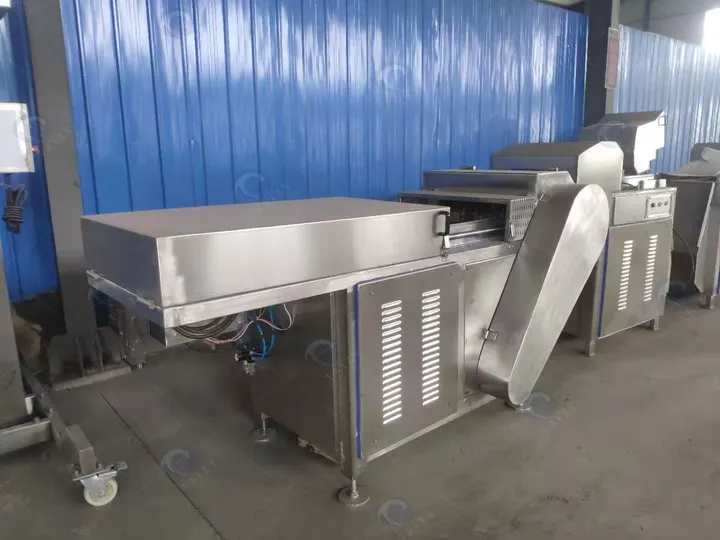
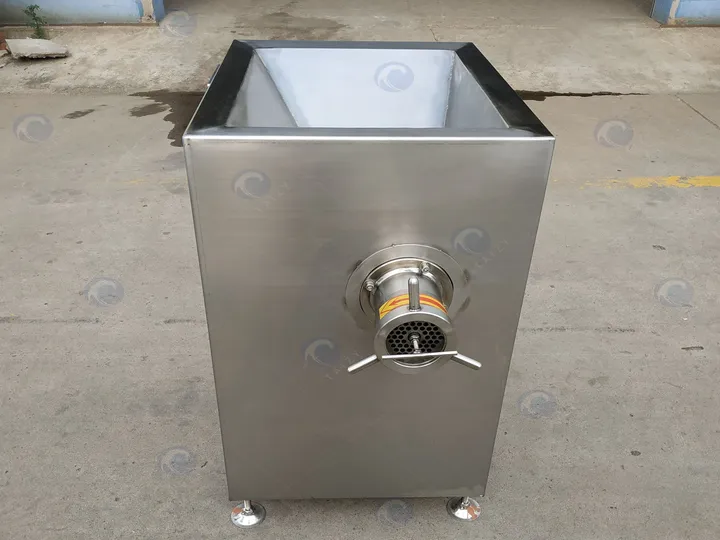
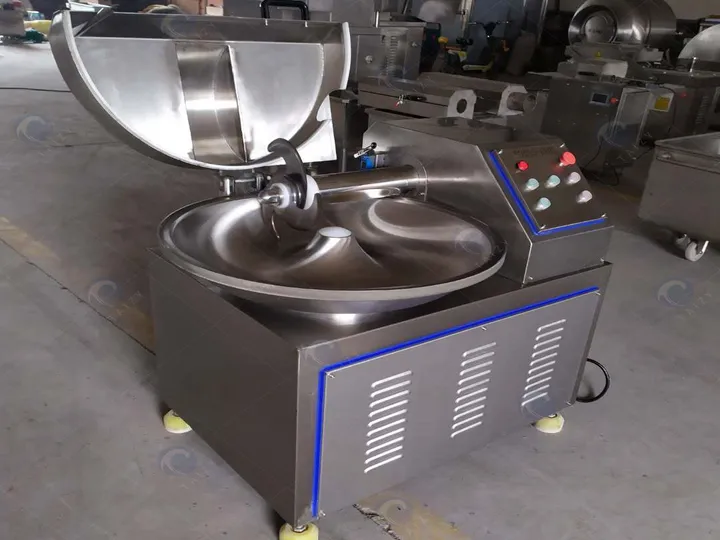
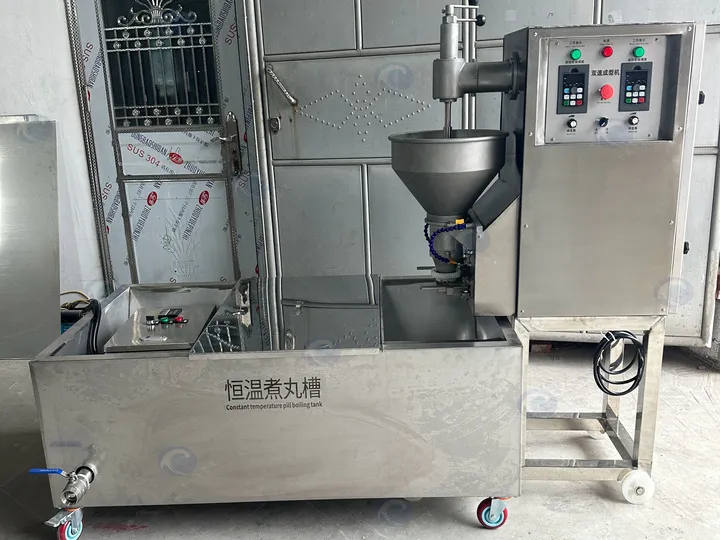
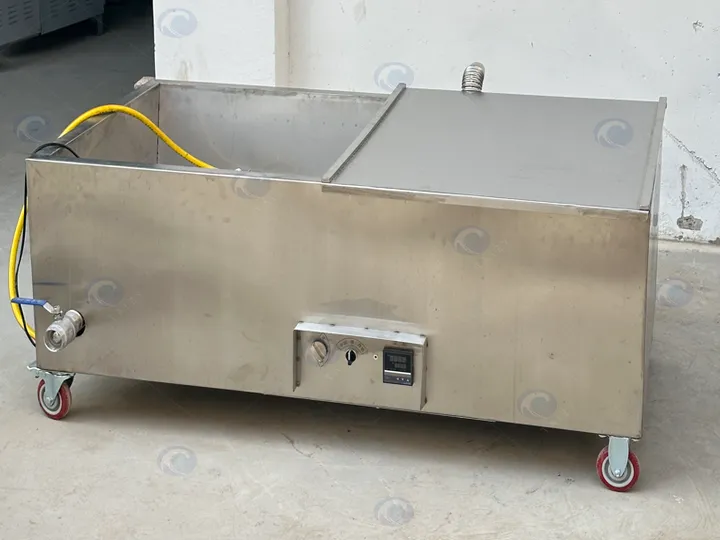
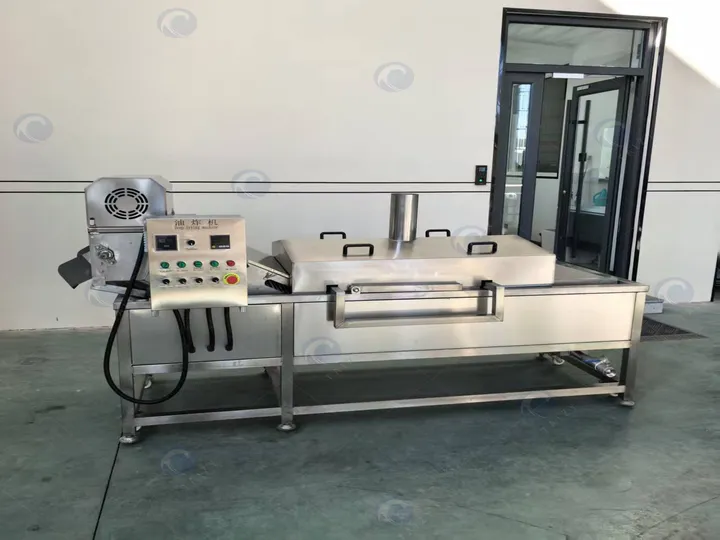
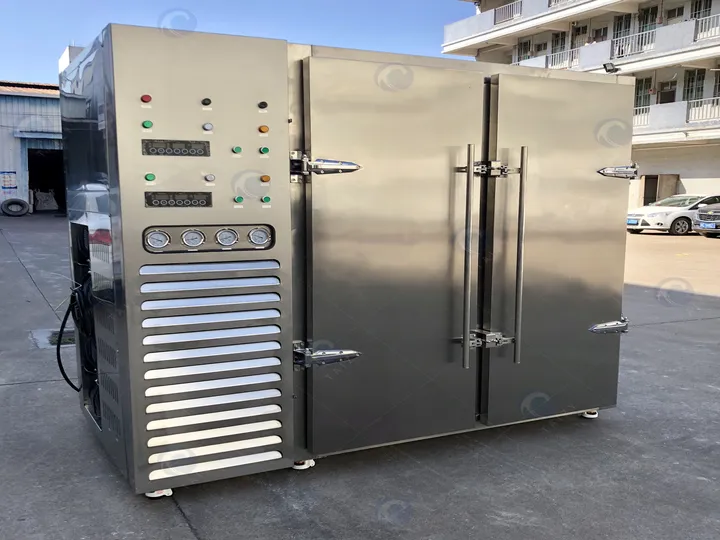
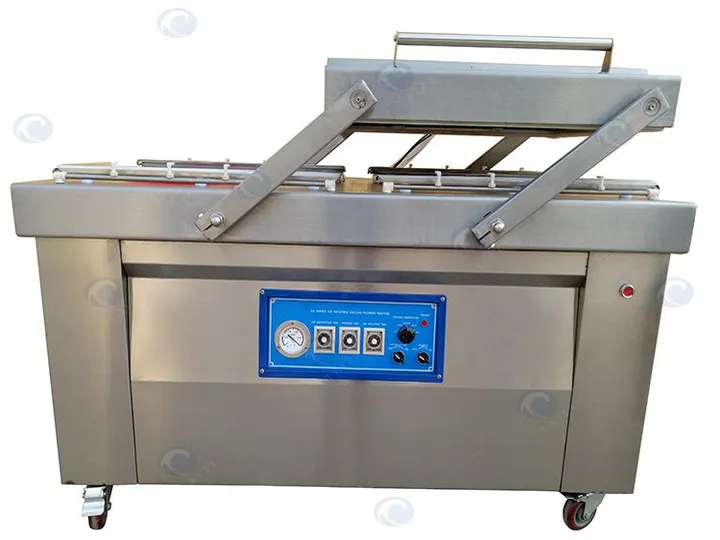
The full workflow covers flaking, grinding, mixing, forming, shaping or cooking, quick freezing, and vacuum packaging. Food-contact parts are 304 stainless steel. This configuration fits mid-sized processing plants that need reliable daily output without over-investing in automation.
Best for: mid-sized meat processing plants and growing food factories.
3. High-Capacity Industrial Meatball Processing Line
For factories supplying large retail chains or export markets, output needs to exceed 1,000 pieces per hour. This configuration uses dual meatball forming machines, longer cooking or shaping tunnels, and faster freezing units.
The line typically stretches 15 to 20 meters and needs five to eight operators plus a maintenance-aware technical team. Power and water consumption are higher, but the cost per meatball drops significantly at volume.
Best for: large factories, co-packers, and export-oriented producers.
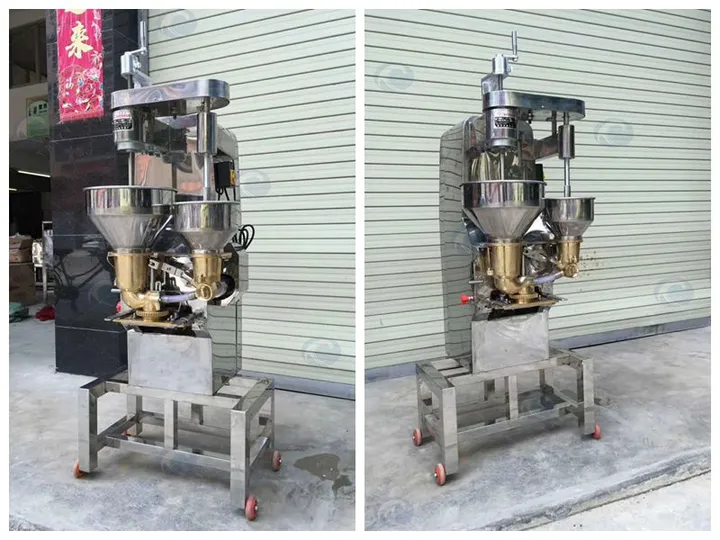
4. Multi-Function Meatball Forming Line
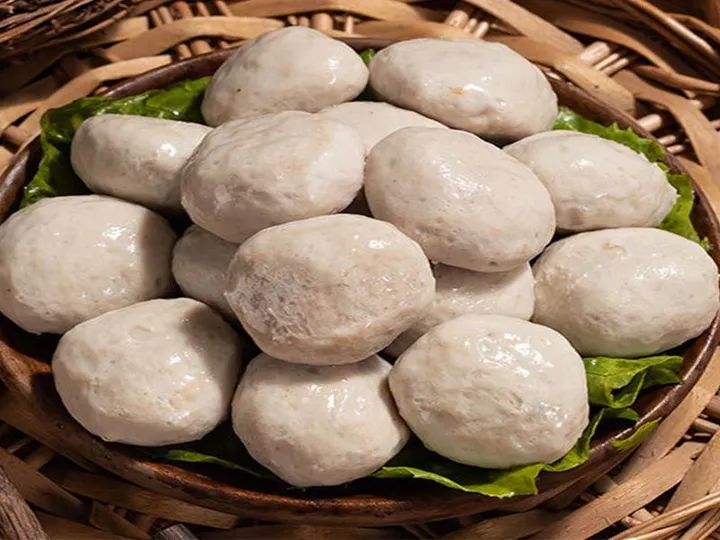
Some businesses produce more than one type of meatball. This setup centers on a flexible meatball forming machine with quick-change molds. It can produce small cocktail meatballs, standard dinner-size balls, or larger stuffed varieties.
It handles beef, pork, chicken, or fish mixes. Optional add-ons include cheese injection units, breading stations, or dual-color forming for specialty products. Output usually ranges from 500 to 800 pieces per hour.
Best for: ready-meal manufacturers, specialty food producers, and co-packers with varied orders.
5. Compact All-in-One Meatball Processing Equipment
When factory space is limited, a compact all-in-one meatball making machine integrates grinding, mixing, and forming into a single frame. Output is lower, typically 300 to 400 pieces per hour, but the footprint may be as small as 5 by 3 meters.
It runs on standard 380V three-phase power and fits into spaces where a full line cannot. While not as fast as a connected system, it delivers commercial-grade consistency for small-scale production.
Best for: small facilities, test kitchens, and businesses with tight floor space.
Side-by-Side Comparison
| Funksjon | Entry-Level Semi-Auto | Standard Automatic | High-Capacity Industrial | Multi-Function | Compact All-in-One |
|---|---|---|---|---|---|
| Utgang | 200–300 pcs/h | 500–600 stk/h | 1,000+ pcs/h | 500–800 pcs/h | 300–400 pcs/h |
| Raw meat throughput | 50–80 kg/h | 100–200 kg/h | 300–500 kg/h | 100–200 kg/h | 60–100 kg/h |
| Line length | ~6 m | 8–12 m | 15–20 m | 10–14 m | ~5 m |
| Operators needed | 2–3 | 3–5 | 5–8 | 3–5 | 1–2 |
| Materiale | 304 rustfritt stål | 304 rustfritt stål | 304 rustfritt stål | 304 rustfritt stål | 304 rustfritt stål |
| Best for | Startups | Mid-sized plants | Large factories | Co-packers | Small spaces |
Which Meatball Production Line Configuration Do You Need?
Start with your verified daily output target. Then compare it to the hourly capacity in the table above. Leave 15 to 20 percent extra capacity for demand growth.
Next, measure your floor space and confirm your power supply. Most commercial meatball production line models require 380V three-phase electricity and a stable water source.
Finally, think about your product range. If you only produce one type of meatball, the standard automatic line is usually the best value. If you plan to produce multiple sizes or stuffed varieties, the multi-function forming line is worth the higher price.
Key Specifications to Confirm with the Supplier
Before placing an order, ask for the following details:
- Exact capacity in pieces per hour and kilograms per hour
- Full line dimensions and weight
- Voltage and power consumption
- Number of workers required
- List of included machines and optional add-ons
- Warranty period and spare parts availability
- Installation support and operator training
The Taizy meatball production line provides these details transparently, which helps buyers plan their facility and labor needs accurately.
Common Mistakes When Selecting a Line
Avoid these errors during your selection process:
- Choosing capacity based on peak demand only. Average daily output is a safer basis for sizing.
- Ignoring floor space. A line that does not fit disrupts the entire factory workflow.
- Forgetting utility checks. Water, drainage, and power must match the equipment requirements.
- Skipping spare parts planning. Molds, blades, and conveyor belts wear out and must be replaceable quickly.
Final Thoughts
The best meatball production line for your business depends on output, space, product variety, and budget. The five configurations above cover most commercial needs in 2026, from small startup units to high-output industrial systems.
The standard Taizy meatball processing line, with 500 to 600 pieces per hour capacity and 304 stainless steel construction, remains the strongest choice for mid-sized buyers who want commercial reliability without excessive complexity.
If you need help selecting the right configuration, contact us for a free consultation, detailed specifications, and a customized factory layout plan based on your space and production goals.