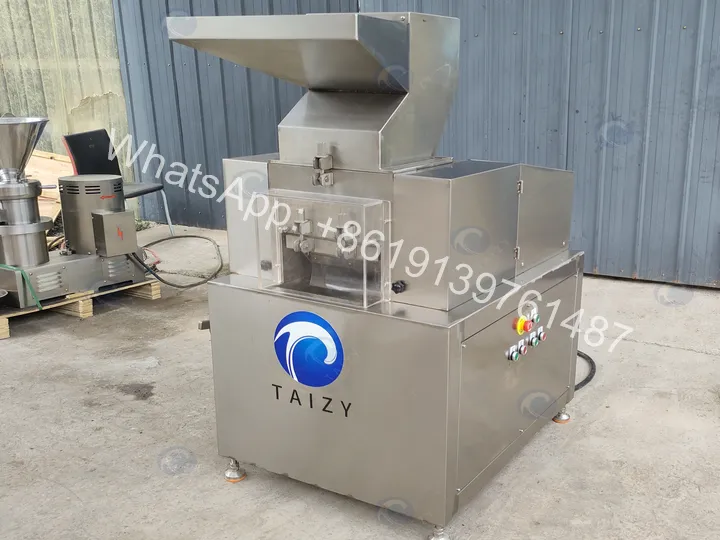
Can a Bone Crusher Grinder Machine Handle Hard Beef Bones?
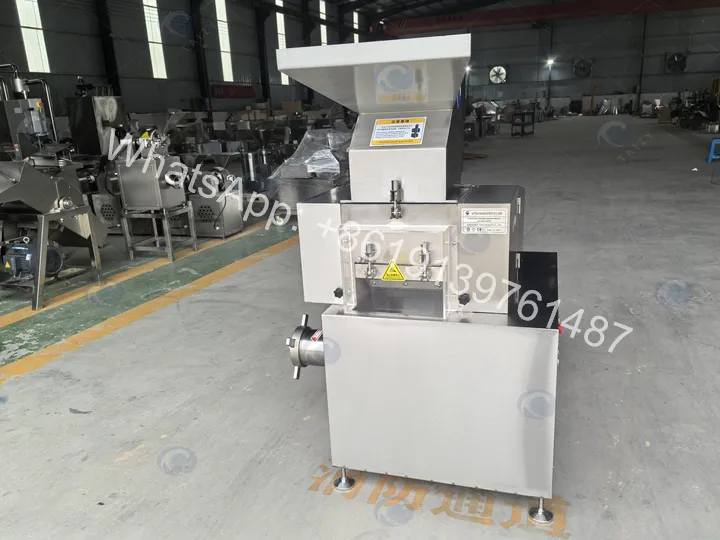
Yes, a properly built bone crusher grinder machine handles hard beef bones without jamming or blade damage. The Taizy machine processes beef bones at 200 to 400 kg per hour, reducing them to a fine 2 to 3 mm finished product. It does this through a two-stage design: a 5.5 kW crushing section breaks the bones first, and a 7.5 kW grinding section finishes the job.

This article explains why beef bones challenge ordinary equipment, how this bone grinding machine handles them, and what operating habits keep performance stable.
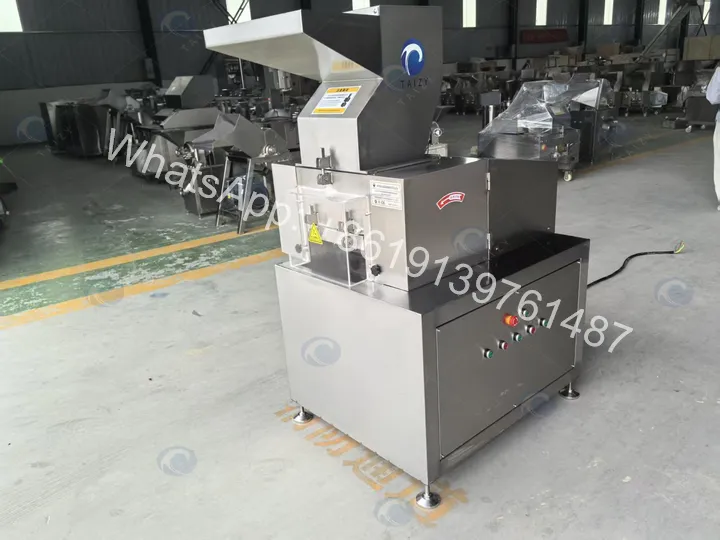
Why Are Hard Beef Bones Difficult to Process?
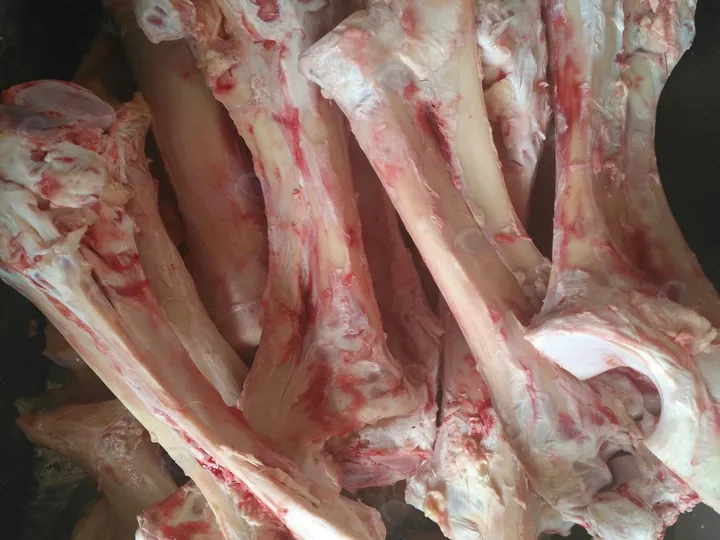
Beef bones are the hardest common material in meat processing. Their dense structure breaks blades, stalls motors, and jams augers on machines designed for meat only. Many processors learn this the hard way. They buy a standard meat grinder, feed in bones, and face broken cutting plates within days.
A dedicated animal bone crushing machine with a grinding stage is built differently. It never asks the grinding blades to break whole bones. The crushing stage does that work first, which protects the fine cutting parts downstream.
How Does a Bone Crusher Grinder Machine Handle Hard Beef Bones?
Crush First, Then Grind
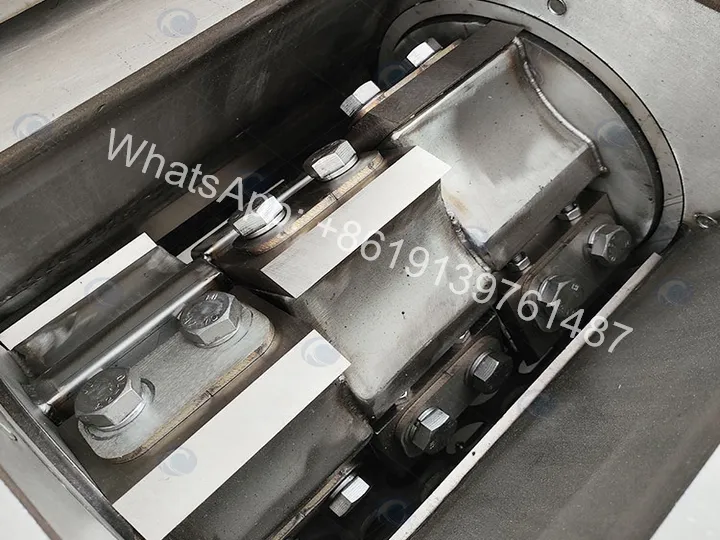
Whole beef bones enter the crushing chamber, where hardened blades break them into small fragments. Only then does the material move to the grinding section. The grinding blades handle fragments, not whole bones. This two-step sequence is the main reason the machine survives hard bone work day after day.
Dual Motors Deliver Full Power at Both Stages
The crushing section runs on its own 5.5 kW motor. The grinding section runs on a separate 7.5 kW motor. Combined, the machine carries 13 kW of working power. Each stage keeps full strength even under heavy load, which prevents the motor stalling common in single-motor designs.
Anti-Rust Treated Blades Last Longer
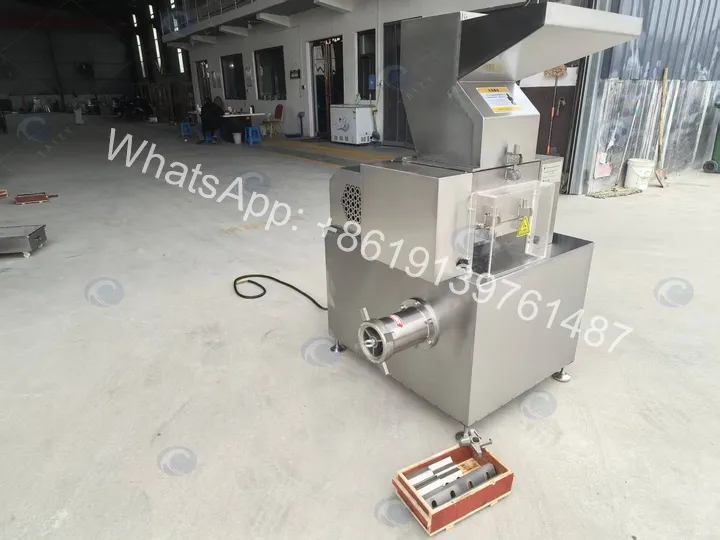
Bone processing is wet and slightly acidic. Blades without protection corrode and dull quickly. The Taizy machine uses anti-rust coated crushing and grinding blades. Each unit ships with one spare crushing blade set and one spare grinding blade, so production continues while worn blades are replaced.
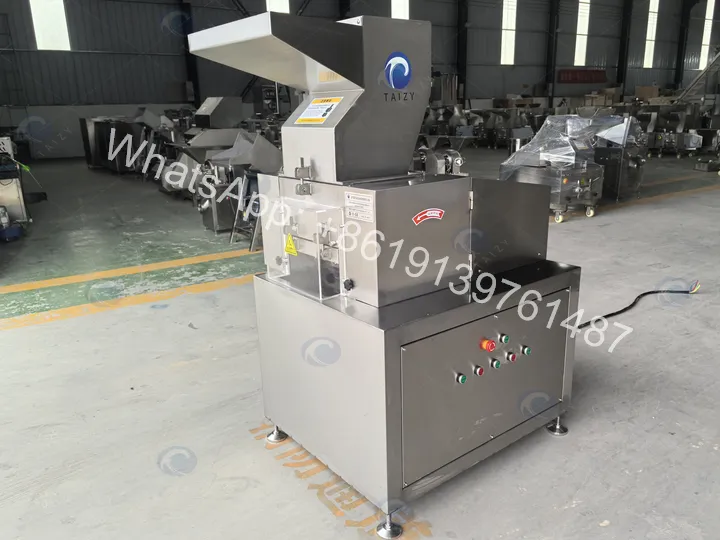
What Are the Technical Specifications for Beef Bone Processing?
| Parâmetro | Especificação |
|---|---|
| Saída | 200–400 kg/h |
| Crushing power | 5.5 kW |
| Grinding power | 7,5 kW |
| Finished product size | 2–3 mm |
| Tensão | 400V, 50Hz, three-phase (Customizable) |
| Material | Aço inoxidável 304 |
| Dimensões | 1200 × 1000 × 1470 mm |
| Peso da máquina | 540 kg |
| Blade treatment | Anti-rust coated |
| Spare parts included | One crushing blade set, one grinding blade |
What Types of Bones Can a Bone Crusher Grinder Machine Process?
The bone crusher grinder machine covers the full range of common processing needs:
- Fresh beef bones: ground to 3 to 4 mm particles
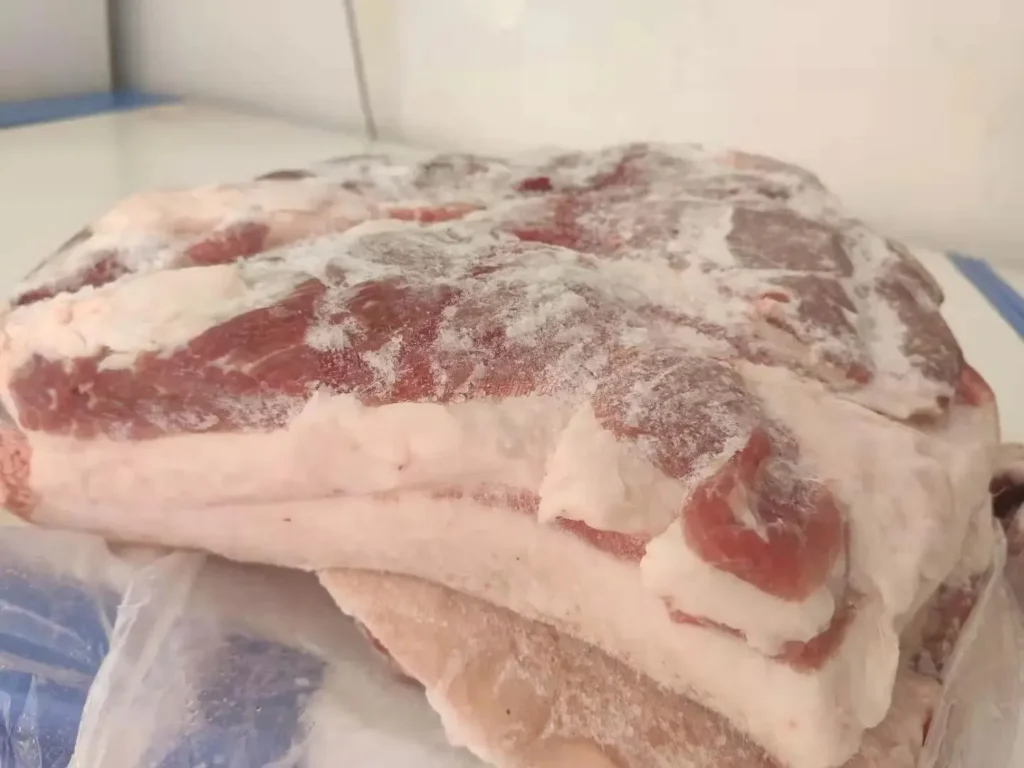
- Frozen beef bones: crushed and ground into small uniform particles with a short cycle
- Pork and lamb bones: processed at the same rate as beef
- Poultry skeletons: chicken and duck frames pass through easily
- Boneless meat: the machine doubles as a heavy-duty meat grinder
One operating rule matters for frozen material. Fully frozen solid bones should be tempered slightly before feeding. This protects the crushing blades and reduces motor load. Semi-frozen bones process without problems.


Adjustable Finished Size with Orifice Plates
Product size depends on the orifice plate in the grinding section. A 5 mm plate produces fine 2 to 3 mm particles, the standard configuration for pet food paste. Larger plates deliver coarser output for feed formulas. The machine suits any application requiring a finished size below 10 mm.
This flexibility lets one machine serve multiple product lines. A processor can run fine pet food paste in the morning and coarser feed material in the afternoon with only a plate change.
How to Get the Best Results from a Bone Grinding Machine?
A few operating habits protect the machine and improve output:
- Feed steadily. Dumping large batches at once overloads the crushing chamber.
- Temper frozen bones. Let fully frozen material sit until it reaches semi-frozen condition.
- Clean daily. Wash the crushing chamber and grinding section after each shift to prevent buildup.
- Check blades weekly. Replace blades at the first sign of dullness rather than waiting for failure.
- Confirm power supply. The machine needs 400V, 50Hz, three-phase power. Custom voltage is available for other markets.
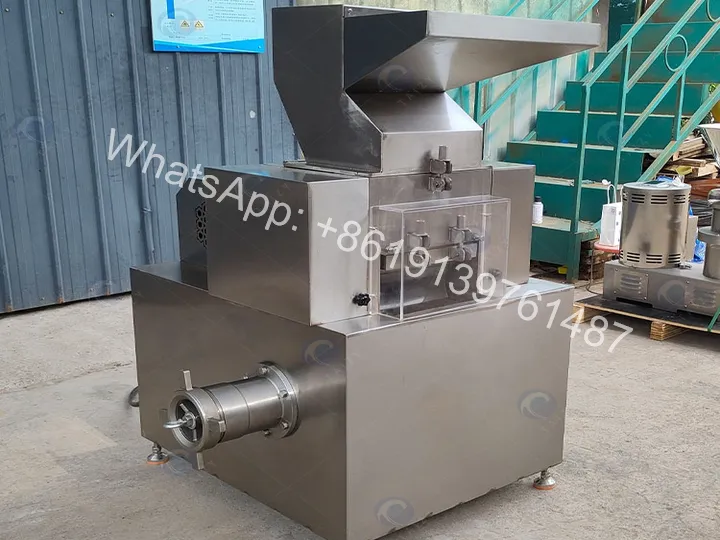
Real Result: Beef Bone Processing for Pet Food
A pet food factory purchased the Taizy meat and bone grinder machine to process beef bones for natural calcium content. The customer previously rejected beef bone contracts because their old equipment could not handle them.
After installation, the factory achieved:
- Stable processing of hard beef bones at over 300 kg/h
- Consistent 2 to 3 mm paste suitable for wet food formulas
- Blade life of three to six months under daily one-shift operation
- A new product line sold to premium pet food brands
The machine paid for itself within the first contract season.
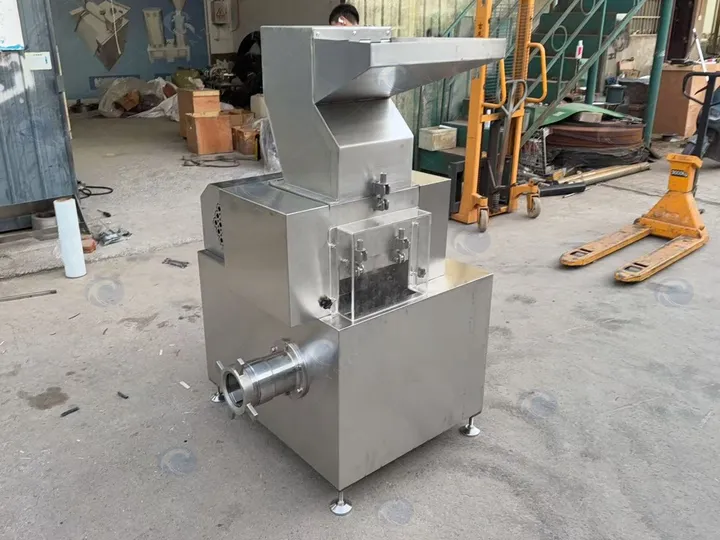
Are You Looking for a Bone Crusher Grinder Machine?
A bone crusher grinder machine built for the job handles hard beef bones reliably. The key is the two-stage design, dual motors, and anti-rust blades. With 200 to 400 kg/h output, a 2 to 3 mm finished size, and 304 stainless steel construction, the Taizy machine covers beef, pork, lamb, and poultry bones as well as boneless meat.
If your business needs to process hard bones without equipment failures, contact Taizy for a quotation, working videos, and a blade configuration matched to your product.