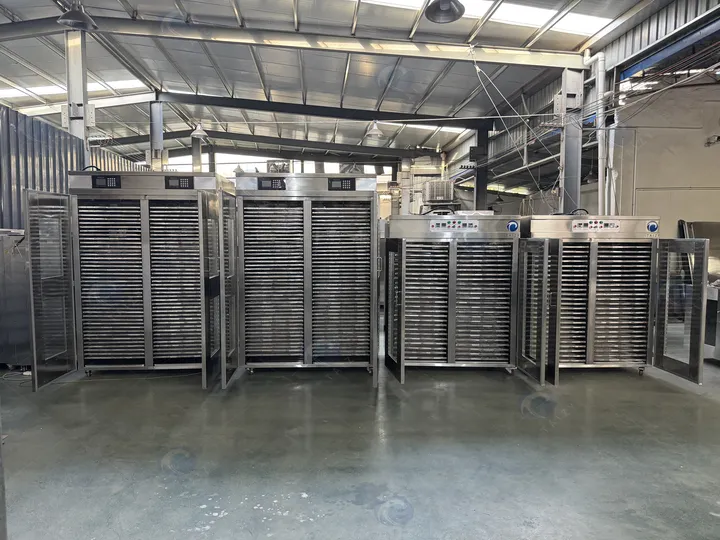
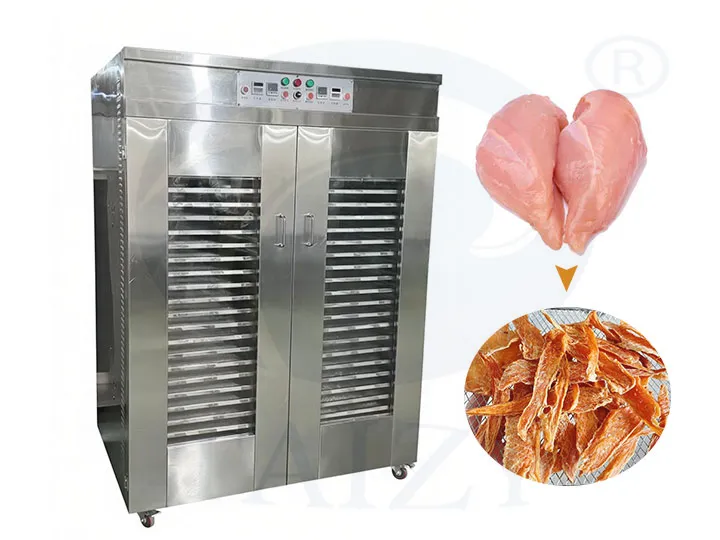
Chicken Breast Drying Machine | Commercial Poultry Dehydrator for Jerky Production



Parameters
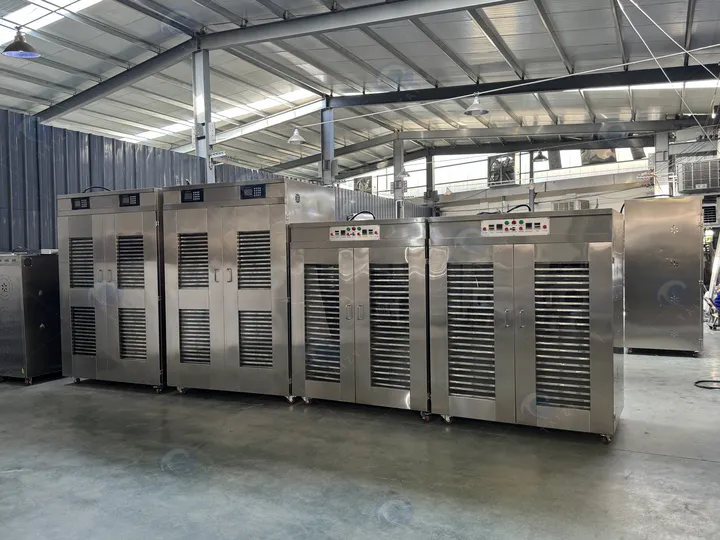
| Machine Type | Single Door / Double Door / Triple Door / Four Door |
| Dimensions | Customizable |
| Power | 3.3KW – 23.5KW |
| Fans | 2 – 24, depending on model |
| Temperature Range | Room Temp – 100℃ |
| Tray Layers | 10 – 160 layers |
| Batch Capacity | 20 – 960 kg |
| Voltage | 220V~, customizable to 380V |
| Suitable Products | Various meats, fruits & vegetables |
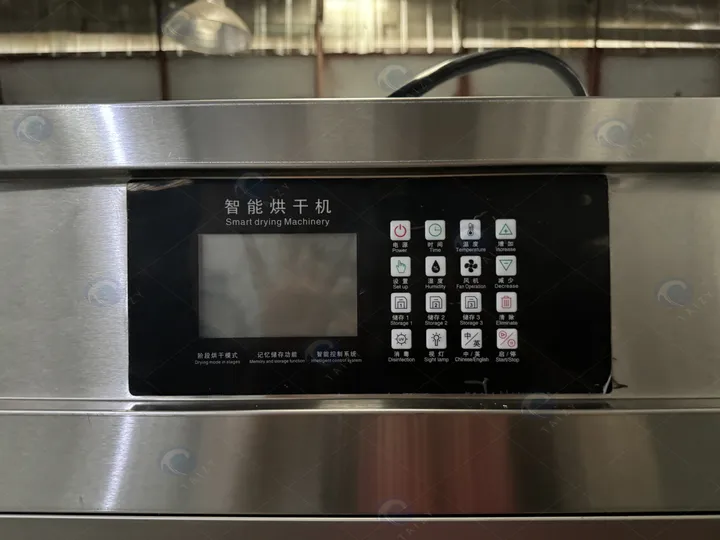
| Control Type | Mechanical / Smart Digital Control |
You can now ask our project managers for technical details
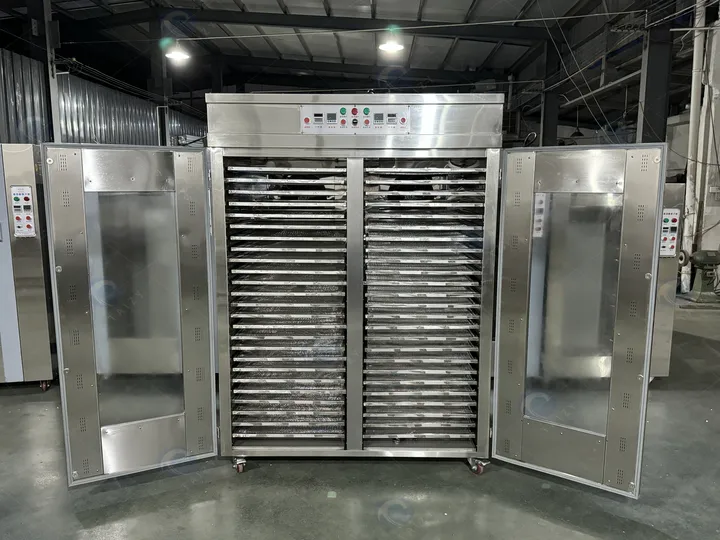
The chicken breast drying machine is an industrial-grade hot-air circulation dehydrator engineered to remove moisture from poultry meat efficiently and uniformly. With single-batch capacities ranging from 60 to 960 kg, this commercial poultry dryer processes chicken breast, chicken fillet, and other white meat into shelf-stable dried products ideal for jerky manufacturing, snack production, and food preservation.
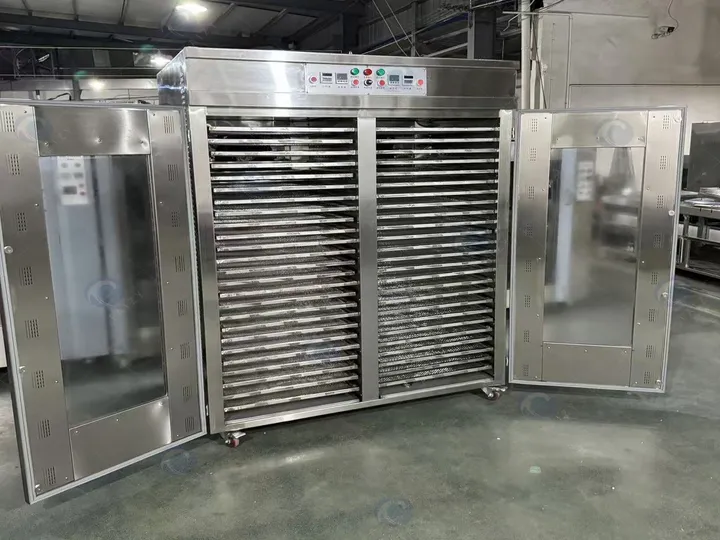
Unlike conventional drying methods that compromise texture and flavor, this chicken jerky dehydrator maintains the fibrous integrity of lean poultry while achieving consistent moisture reduction. The equipment operates at precisely controlled temperatures between 50°C and 100°C, ensuring food safety standards are met without overcooking or case-hardening the protein surface.
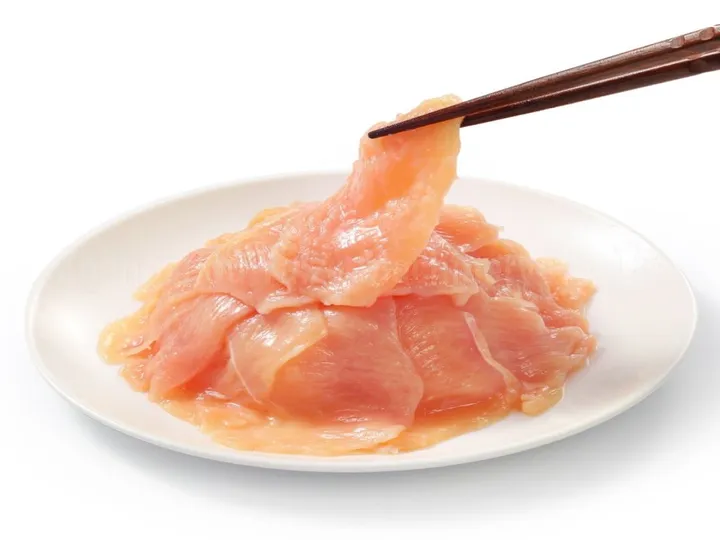
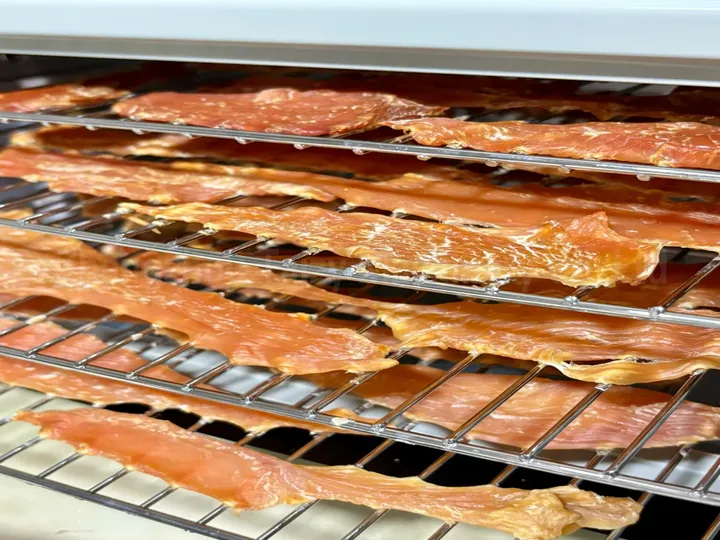
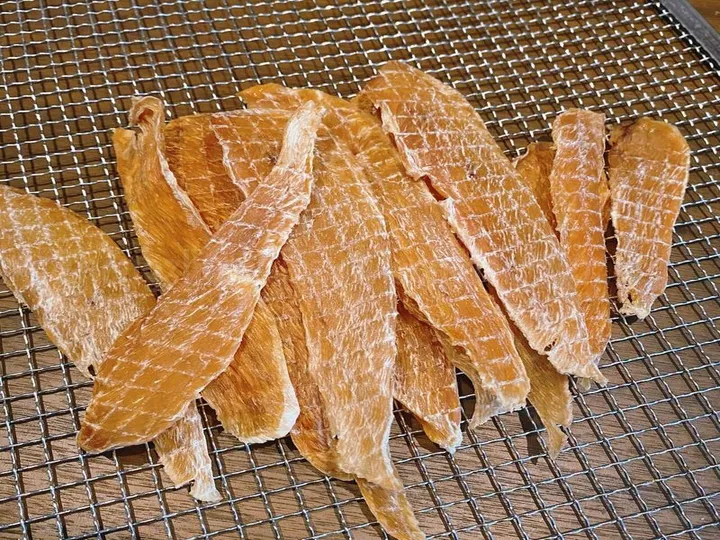
At Taizy Food Machinery, we have equipped meat processing facilities across the United States, Australia, and Southeast Asia with heavy-duty drying solutions for over two decades. Our chicken breast dehydrators are built with food-grade stainless steel and certified to ISO9001, CE, and SGS standards.
Core Functions of the Chicken Breast Dryer
Uniform Hot-Air Circulation
The rear-mounted circulation system distributes heated air evenly throughout the drying chamber. Multiple high-capacity fans eliminate cold spots and prevent uneven dehydration, ensuring every batch of chicken breast dries at the same rate regardless of tray position.
Precision Temperature Management
Operators can adjust drying temperatures from room temperature up to 100°C through an intelligent digital control panel. This flexibility allows processors to customize heat levels based on slice thickness, initial moisture content, and final product specifications.
High-Volume Batch Processing
Designed for commercial-scale operations, the chicken breast drying equipment handles continuous production cycles. From small butcher shops requiring 60 kg per batch to industrial plants processing nearly one metric ton, the machine scales to match output demands.
Energy-Optimized Design
The recirculating airflow pathway recovers thermal energy and reduces overall power consumption. Compared to open-system dryers, this closed-loop configuration cuts energy costs by up to 30% while maintaining throughput.
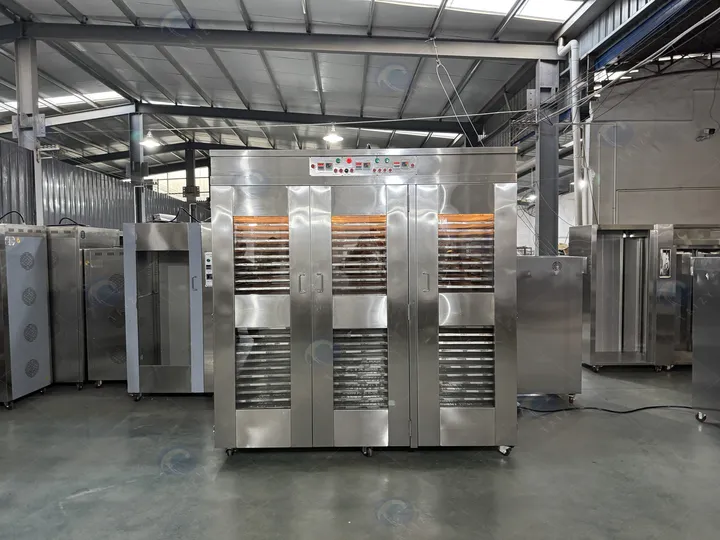
Technical Specifications
| Model | Chamber Type | Dimensions (cm) | Power | Fan Count | Capacity (kg/batch) | Weight (kg) |
|---|---|---|---|---|---|---|
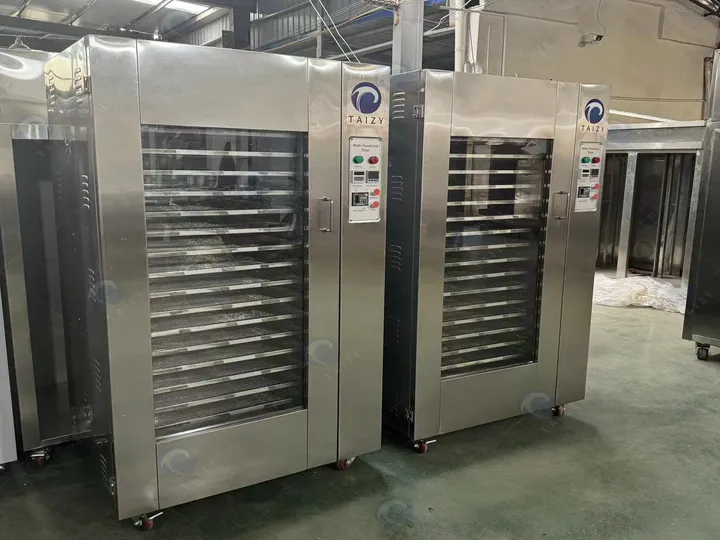
| XD-145 | Single Door | 90 × 64 × 145 | 3300 W | 3 | 20–40 | 120 |
| XD-169 | Single Door | 90 × 64 × 169 | 4500 W | 4 | 20–50 | 130 |
| XD-196 | Single Door | 90 × 64 × 196 | 5800 W | 5 | 40–70 | 150 |
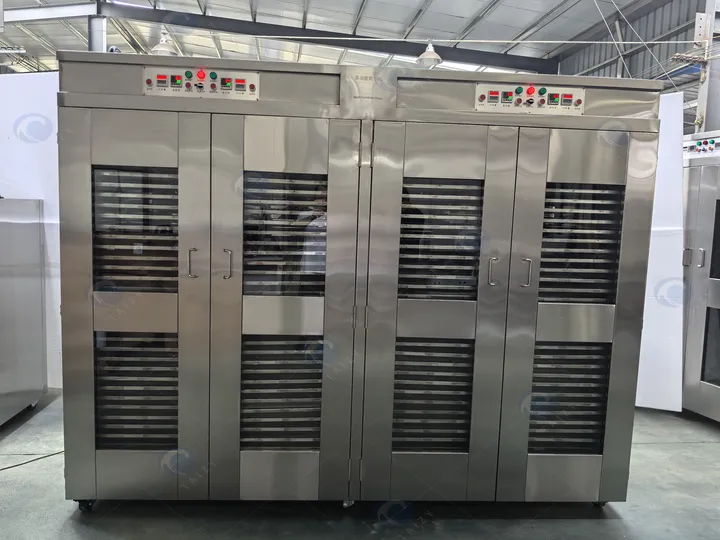
| XD-169P | Double Door | 134 × 94 × 169 | 6600 W | 6 | 60–100 | 280 |
| XD-189P | Double Door | 134 × 94 × 189 | 8800 W | 8–10 | 100–140 | 300 |
| XD-211P | Double Door | 134 × 94 × 211 | 10 kW | 10 | 140–180 | 320 |
| XD-189P3 | Triple Door | 201 × 94 × 189 | 12 kW | 12 | 160–200 | 480 |
| XD-211P3 | Triple Door | 201 × 94 × 211 | 16.5 kW | 15 | 180–220 | 610 |
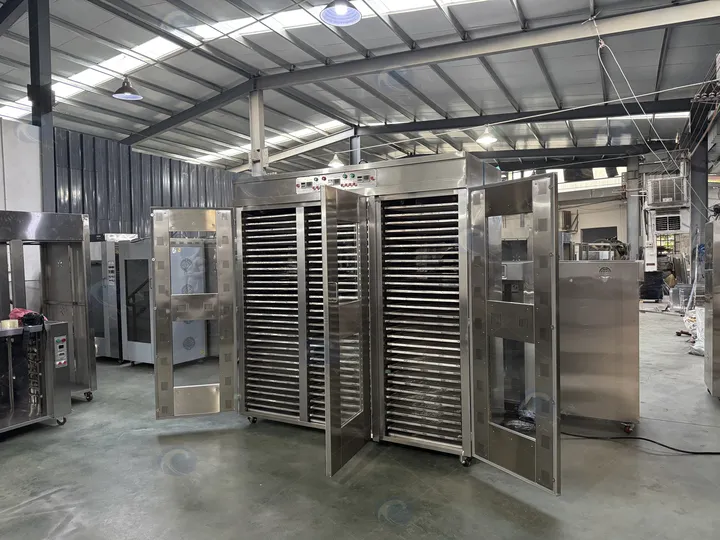
| XD-189P4 | Four Door | 268 × 94 × 189 | 16 kW | 20 | 640–800 | 600 |
| XD-211P4 | Four Door | 268 × 94 × 211 | 21.5 kW | 24 | 860–1020 | 680 |
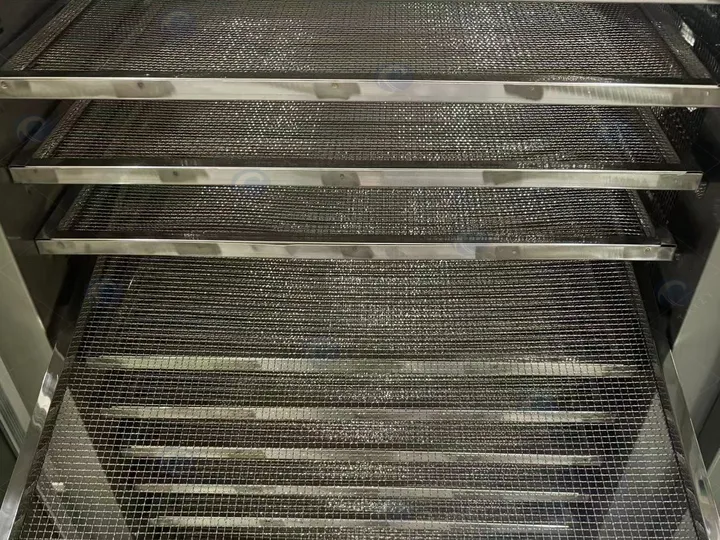
- Material Options: Standard body in 201 stainless steel; 304 stainless steel available upon request. All mesh trays are 304-grade.
- Temperature Range: 50°C–100°C standard; high-temperature models up to 250°C available for specialized applications.
Suitable Applications for Poultry Drying
Chicken Breast Jerky
Lean chicken breast slices dehydrate into high-protein, low-fat jerky snacks. The controlled drying environment prevents fat oxidation and preserves the natural umami flavor of poultry meat
Chicken Fillets and Strips
Uniform drying of chicken fillets creates shelf-stable meal prep ingredients. The consistent airflow ensures even moisture removal from both thin and thick-cut portions.
Duck and Turkey Breast
The adjustable temperature settings accommodate the higher fat content of duck meat and the dense protein structure of turkey breast, delivering optimal results across multiple poultry species.
Processed Poultry Products
Sliced chicken ham, marinated poultry strips, and seasoned meat snacks all benefit from the precise humidity control and customizable drying cycles.
Why Processors Choose This Chicken Breast Dehydrator?
Consistent Product Quality
- Every tray receives identical airflow and temperature exposure. Batch-to-batch variation drops below 5%, meeting the strict quality standards of retail jerky brands and commercial food distributors.
Extended Shelf Life
- Reducing moisture content to 10–15% inhibits microbial growth without chemical preservatives. Dried chicken breast stored in vacuum packaging remains shelf-stable for 12 months or longer.
Labor Cost Reduction
- Automated temperature and timer controls eliminate the need for constant manual monitoring. One operator can manage multiple drying cycles simultaneously, cutting labor expenses by up to 40%.
Versatile Configuration
- Choose from mechanical dial controls or smart digital panels. Rotary tray systems, static rack designs, and custom mesh sizes adapt the machine to your specific product line.
Rapid Return on Investment
- With industrial durability rated for 10+ years of continuous operation, the chicken breast drying machine pays for itself through energy savings, reduced spoilage, and premium product pricing.
How the Chicken Breast Drying Machine Works
The dehydration process relies on controlled convective heat transfer:
- Preparation: Slice chicken breast to uniform thickness (3–8 mm recommended). Arrange slices on stainless steel mesh trays without overlapping.
- Loading: Insert trays into the drying chamber. Close doors and engage the locking seals to prevent heat loss.
- Programming: Set target temperature and drying duration. For chicken breast jerky, we recommend starting at 65°C for 4 hours, then reducing to 55°C for the final 2–4 hours.
- Circulation: Heating elements warm the air while axial fans force circulation through the product stack. Moisture-laden air exits through exhaust vents as fresh dry air enters.
- Completion: The control system alerts operators when the cycle ends. Remove trays and allow products to cool before packaging.
Pro Tip: For maximum tenderness, marinate chicken breast slices before drying. The machine’s low-temperature capability preserves volatile flavor compounds that high-heat methods destroy
Solving Common Poultry Drying Challenges
Problem: Uneven Drying Across Trays
- Solution: The rear air circulation system eliminates this issue by forcing heated air through dedicated ducts rather than relying on natural convection. Every tray level receives identical airflow volume.
Problem: Case Hardening (Hard Outer Surface, Moist Interior)
- Solution: The programmable two-stage drying profile starts at moderate heat to drive surface moisture, then automatically reduces temperature for gentle internal dehydration without crust formation.
Problem: High Energy Costs from Batch Processing
- Solution: The insulated chamber walls and recirculating airflow design recover up to 70% of thermal energy. Night-shift operations benefit from off-peak electricity rates without compromising morning delivery schedules.
Problem: Cross-Contamination Between Batches
- Solution: Removable tray racks and smooth stainless steel interior surfaces enable complete wash-down in under 15 minutes. The enclosed chamber design prevents external contaminants from entering during drying.
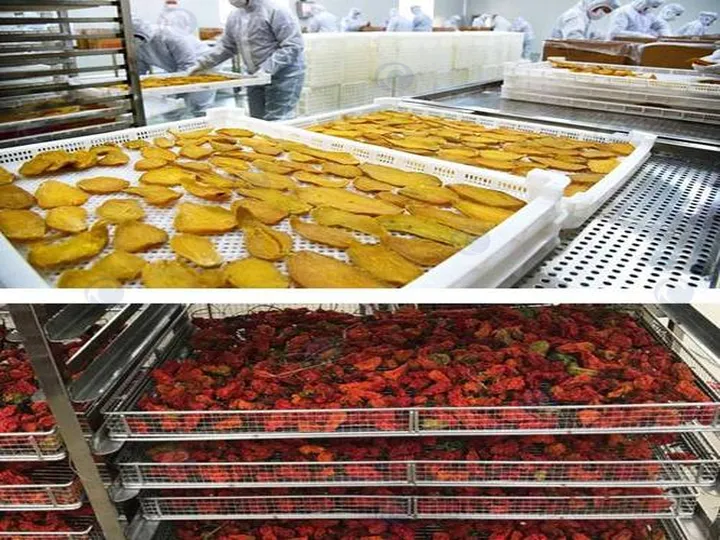
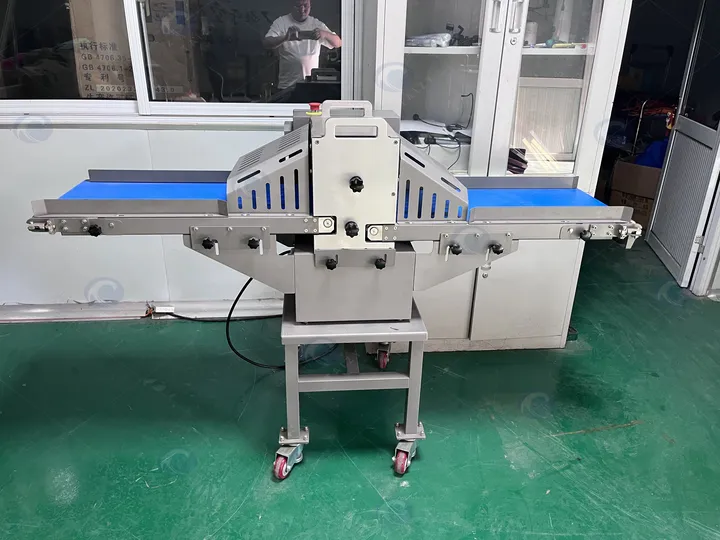
Related Equipment for Poultry Processing Lines
Achieve uniform slice thickness before drying with our commercial meat slicers. Consistent 3–8 mm cuts ensure even dehydration and professional presentation in the final jerky product.
FAQ
What thickness should I cut chicken breast for jerky?
For optimal drying efficiency and texture, slice chicken breast to 4–6 mm thickness. Thinner slices dry faster but may become brittle; thicker slices require extended drying time but retain more chewiness.
How long does a chicken breast take to dehydrate?
Typical drying time ranges from 6 to 10 hours, depending on slice thickness, initial moisture content, and target final humidity. A 5 mm slice at 65°C generally reaches 12% moisture content in 7–8 hours.
Can this machine dry other meats besides chicken breast?
Yes. The equipment handles beef jerky, pork strips, turkey breast, duck meat, fish fillets, and sausages. Temperature and time settings adjust to accommodate each protein’s unique fat and moisture profile.
What is the difference between mechanical and smart control models?
Mechanical models use dial thermostats and analog timers. Smart models feature digital touchscreens with programmable recipes, humidity sensors, and automatic cycle documentation for HACCP compliance.
Does the machine require installation by your engineers?
Most single-door and double-door models operate on standard 220V or 380V power and require no specialized installation. We provide English operation manuals and video guidance. For large multi-door units, on-site engineer support is available upon request.
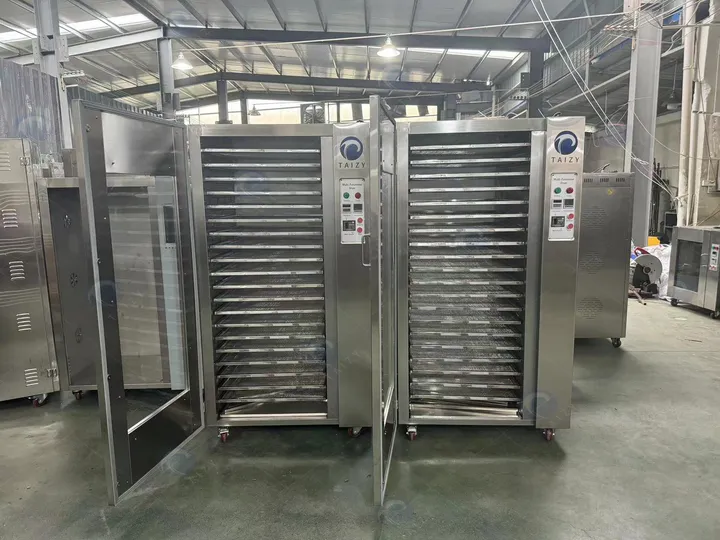
Get a Custom Quote for Your Chicken Breast Drying Operation
Tell us your daily production target, available facility space, and power supply specifications. Our engineers will recommend the ideal chamber size and configuration for your chicken breast jerky or dried poultry product line.